

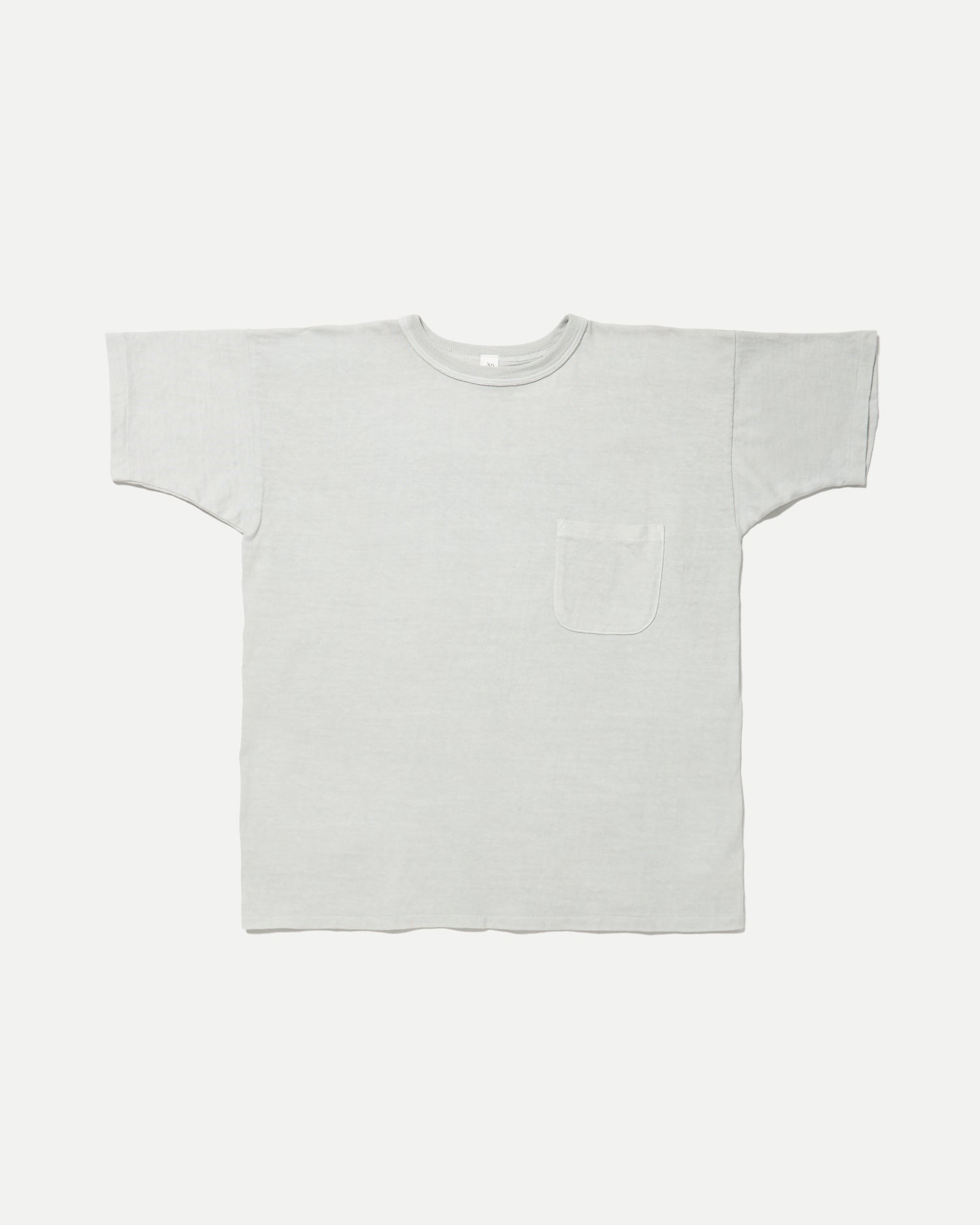
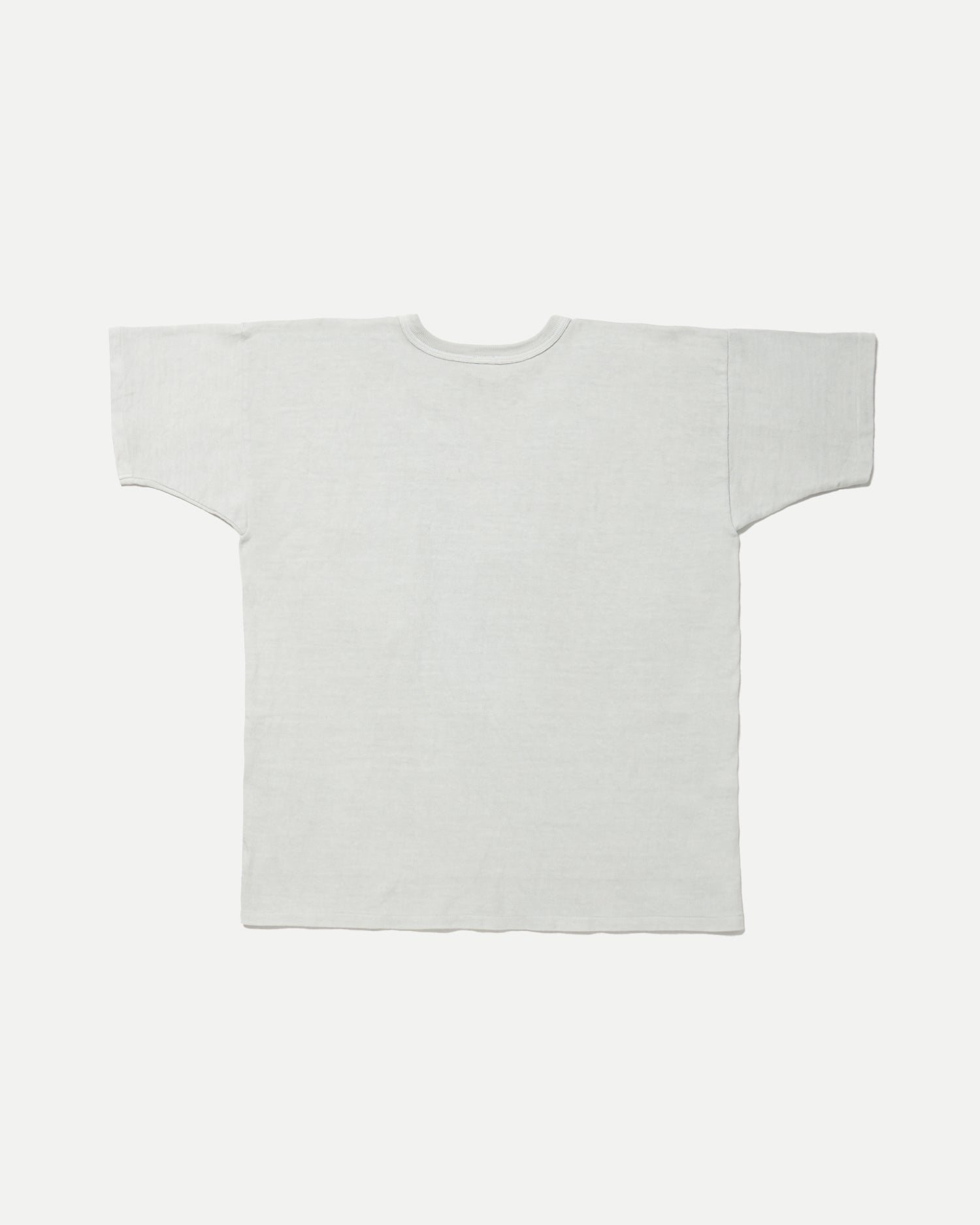
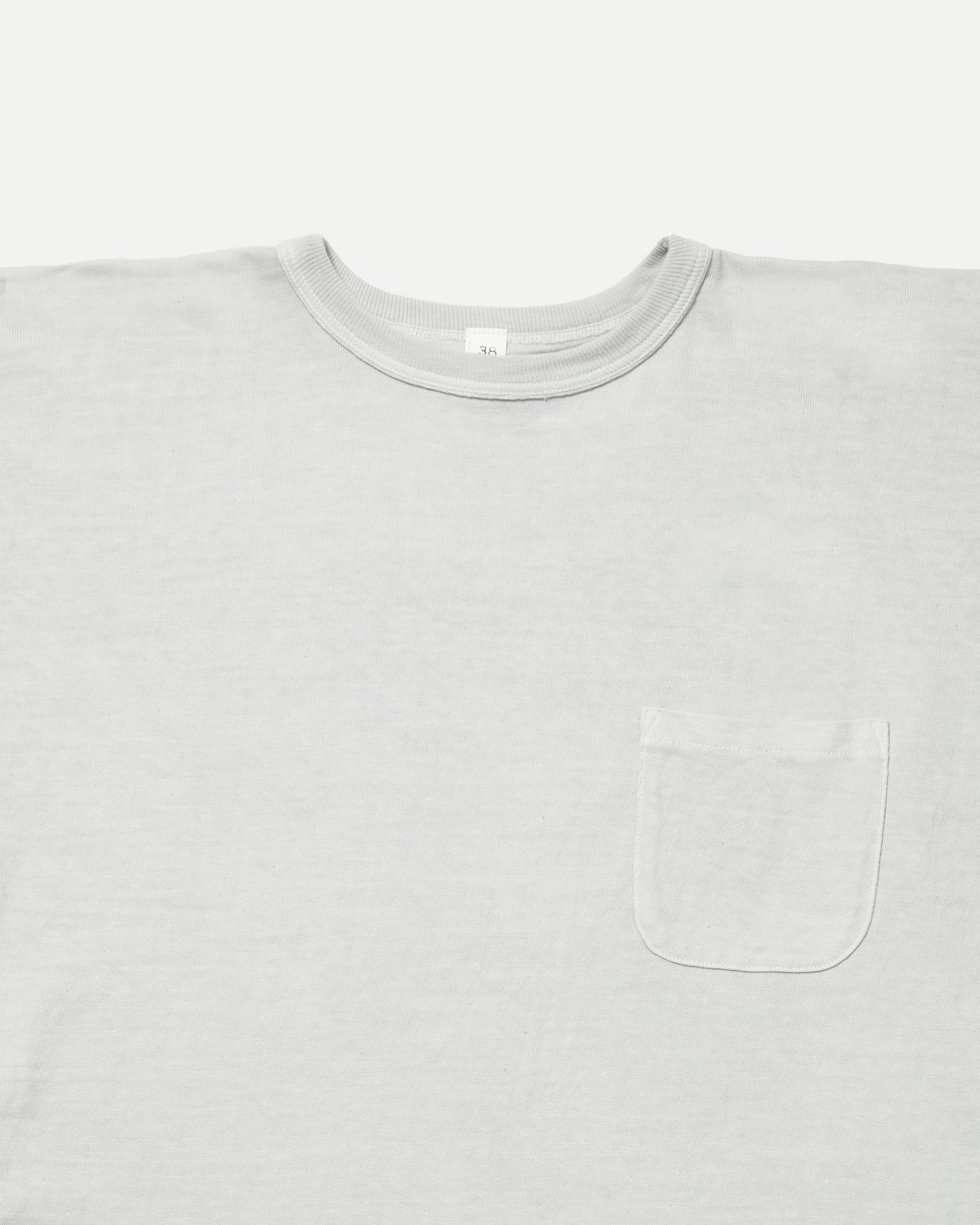
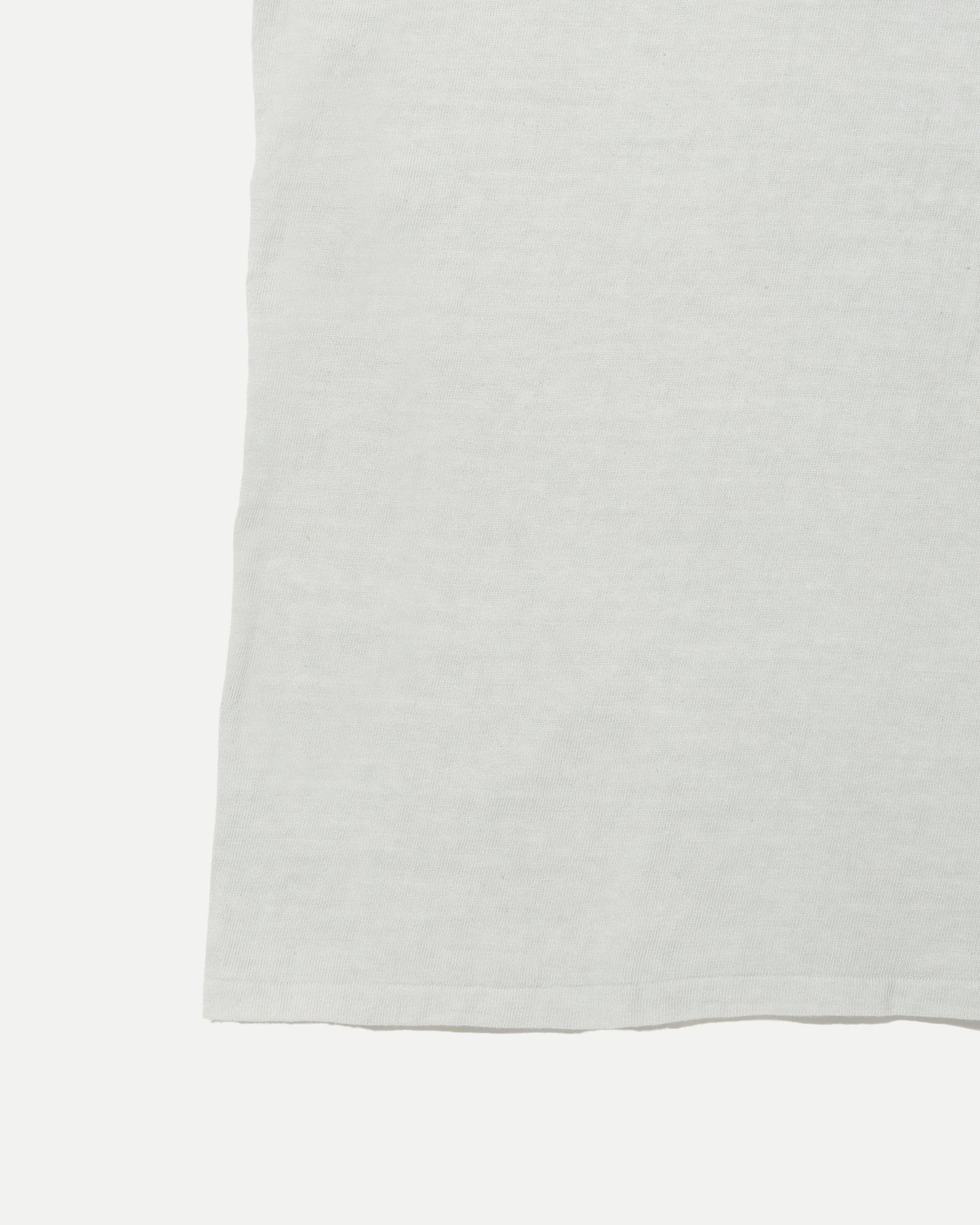
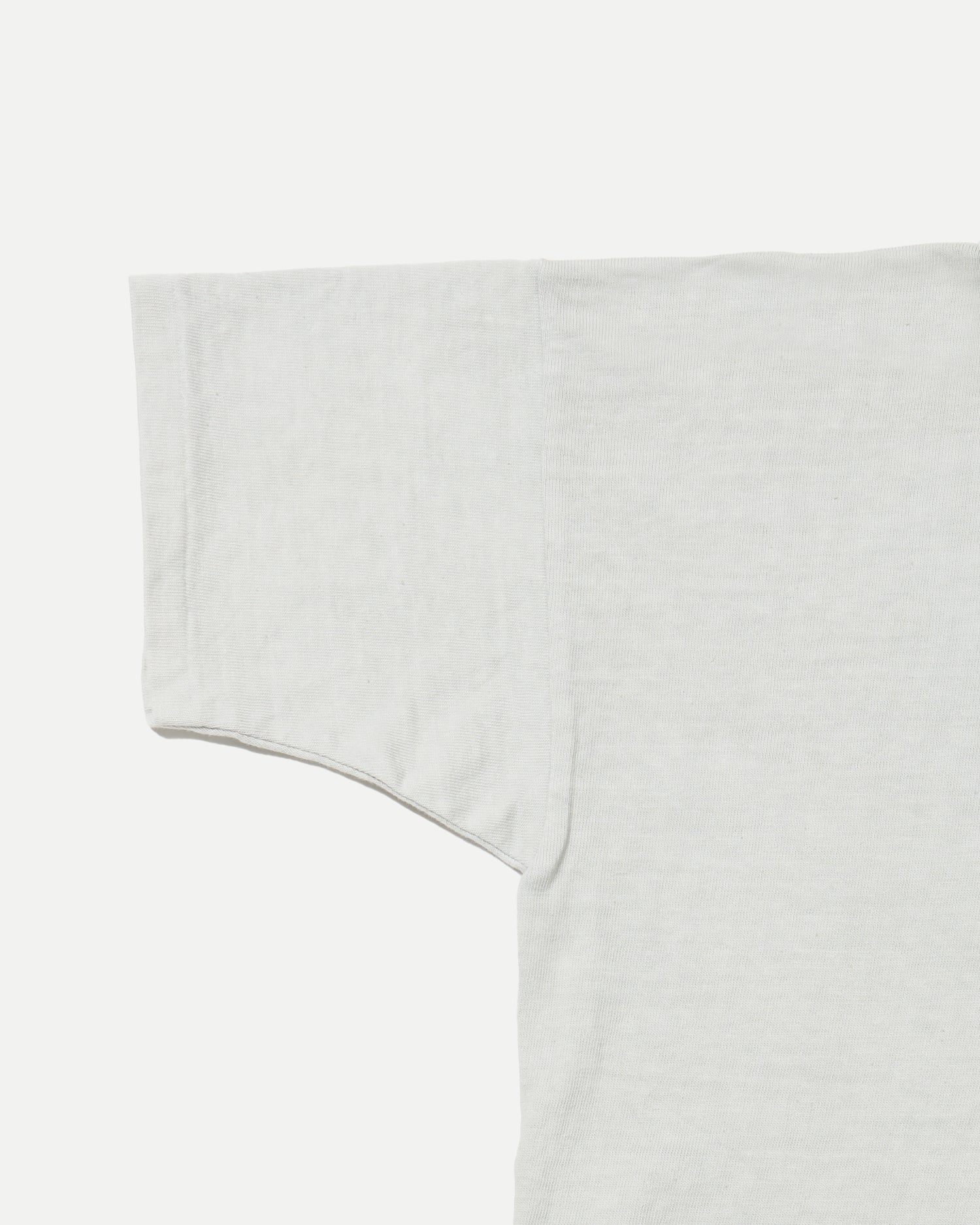
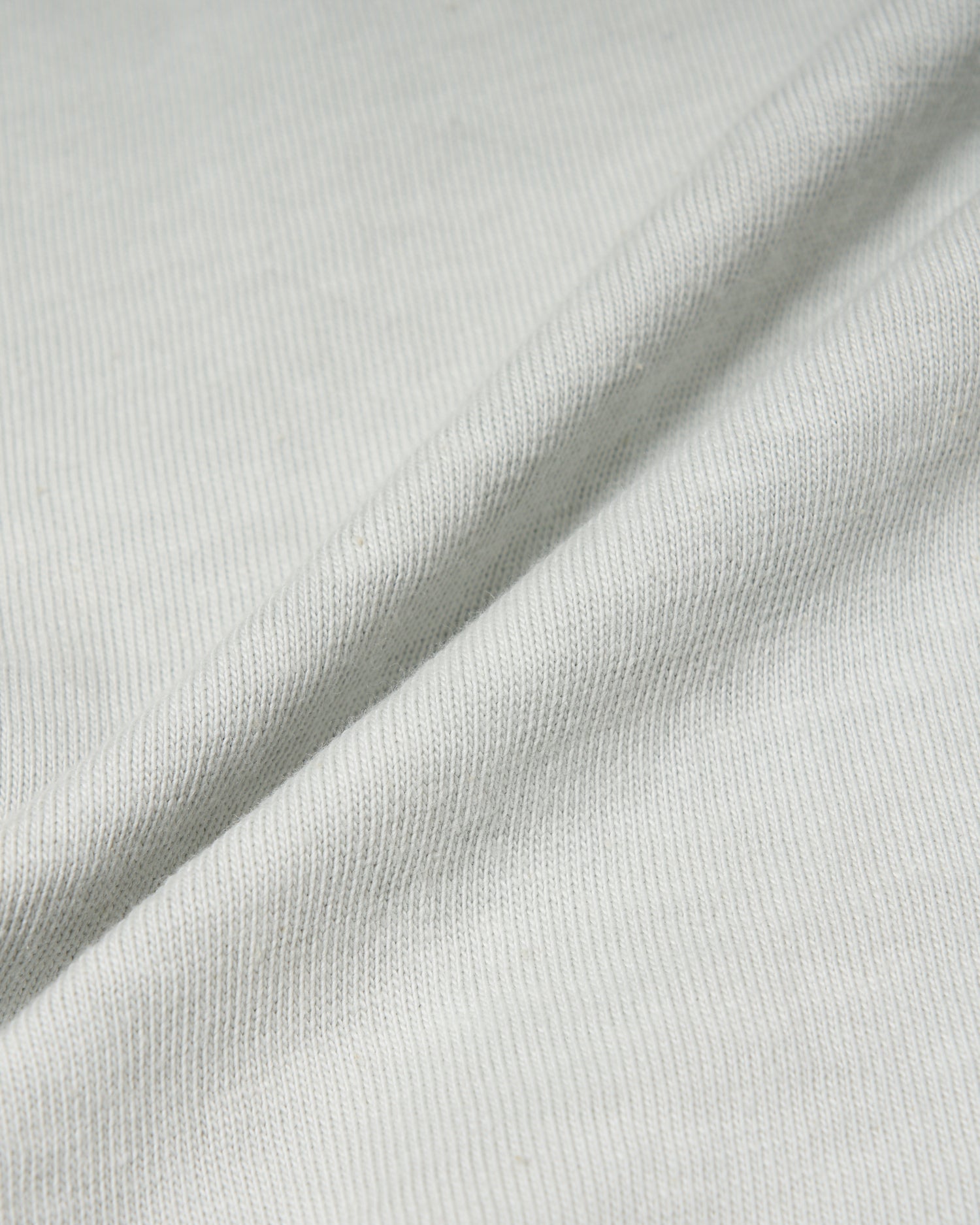
T-shirt is one of the clothing items that define America. Our study into the manufacturing process of T-shirt, originally developed as an underwear for civil and military uniforms, revealed how it derives from the rational manufacturing principle typical of America. The simplest design _ the tube-shaped fabric, cut in three parts for the neck and arms and attached with sleeves _ has absolutely no room for wastefulness. While it looks similar to what we daily wear today, it is something totally different in nature. Details like shoulders without slopes, boatneck-like neckline, and double neck ribbing to prevent stretching are signatures of designs from that time. The tubular jersey cotton was manufactured by a hanging knitting machine in Wakayama. The use of American cotton achieves a dry, unique texture in the fabric. Hanging knitting machines were introduced to Japan during Taisho era (1912 _ 1926). The one in Wakayama is now the world's only machine from that period still in operation. While it lacks efficiency because it can only knit a meter per hour, the slow process creates unique texture with moderate unevenness as if the surrounding air is woven into the texture.
Carefully dyed with natural dyes using traditional dyeing techniques, no two are alike and you can enjoy a unique look.
Our products are dyed with natural dyes, so there may be uneven dyeing, but it is a characteristic of the product. Please note that the color may fall or migrate when exposed to sunlight, friction, or wetting with water for a long period of time. Please avoid layering with white or light-colored items. The iron accessories used for tack buttons, rivets, buckles, etc. are faithfully reproduced in the details of old times, and since the materials have not been faithfully processed to prevent rust etc, Therefore, there is a possibility that the accessories may rust or become dangerous (sharp pin tips) when used. We cannot be held responsible for any accidents or damages caused by the use of this product, so please check the product thoroughly and make sure you understand the product. About Size and Dimensions Even for the same item, there may be individual differences of 1 to 2 cm due to the production and processing process. Tucks and gathers are measured by placing the garment naturally without spreading it out and adjusting the shape of the product.
| Length(cm) | Shoulder(cm) | Chest(cm) | Sleeve(cm) | |
|---|---|---|---|---|
| 36 | 61 | 45 | 48 | 15 |
| 38 | 63.5 | 48 | 53.5 | 15 |
| T.T | 38 | 40 | 42 | 44 | 46 |
|---|---|---|---|---|---|
| EU | 44 | 46 | 48 | 50 | 52 |
| JP | S | M | L | XL | XXL |